

Keeping your pool water clean and healthy is essential for maximum enjoyment. One of the most innovative and efficient solutions to achieve this is the domestic salt water chlorinator. In this article from TrypoolWe explain everything you need to know about this system and how it can transform your pool care. Everything you need to know about domestic salt chlorinators.
What is a salt chlorinator?
A salt chlorinator is a device that transforms the salt dissolved in the pool water into chlorine in a natural and constant way. Thus, the salt chlorination system offers an automatic and safe way of keeping the water clean, avoiding the direct use of traditional chemical products.
Advantages of the domestic salt water chlorinator.
Among the most important benefits of using a pool chlorinator are the following:
Greater comfort: The system works automatically, generating chlorine without the need to add it manually.
Less irritation: Pool salt chlorination is gentler on skin and eyes.
Economic savings: Reduces the constant purchase of traditional chlorine.
Lower maintenance: Thanks to its operation, the pool requires less constant attention.
Types of salt chlorinators for domestic pools.
There are different types of salt chlorinators among the main ones we can differentiate between:
Saline chlorinator for small pools.
These models are specifically designed for smaller pools, offering an efficient and economical system for keeping the water crystal clear.
Automatic salt water chlorinator.
Equipment with programmable systems that regulate chlorine production according to use and water conditions, making maintenance even easier.
Salt chlorinator with pH regulator.
Some advanced models include a built-in pH regulator, which helps to maintain the chemical balance of the water, improving the effectiveness of chlorine and preventing problems caused by inadequate pH.
Installation and maintenance of the domestic salt water chlorinator.
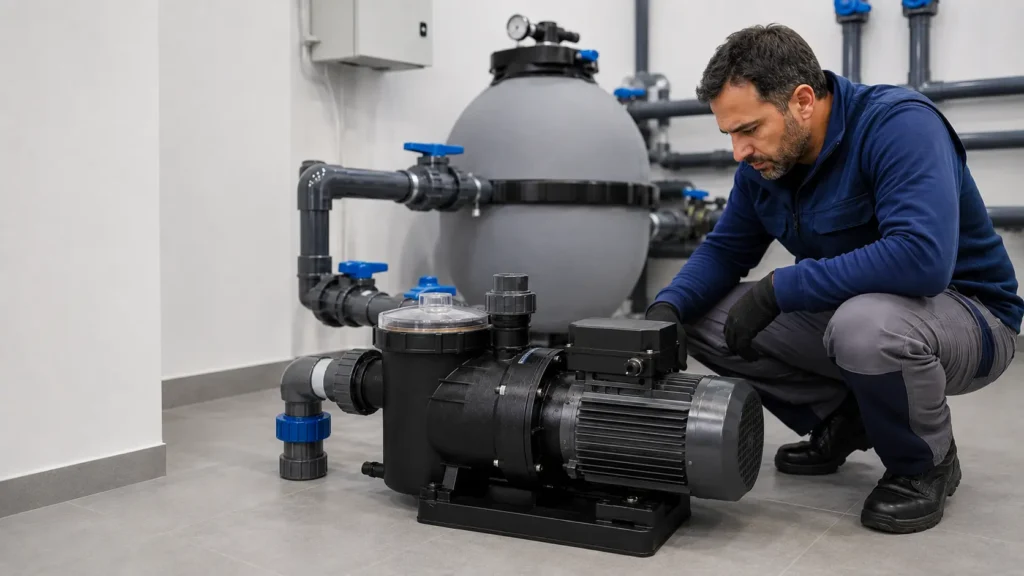
The installation of a domestic salt water chlorinator is simple and can be carried out by professionals or users with basic knowledge. It is generally installed in the pool's filtration circuit.
Maintenance of the salt chlorinator is usually minimal, but it is important to clean the electrodes regularly and check the salt and pH levels to ensure optimum performance.
How to choose a domestic salt water chlorinator for swimming pools.
To select the ideal model, consider the size of your pool, the type of water and whether the pool is above ground or above ground. Also evaluate additional functions such as pH regulator or automatic systems. If you have any questions you can contact our Trypool team, we have sales specialists who will help you make your decision.
What are the advantages of the salt chlorinator over traditional chlorine?
In addition to being safer for health, the salt chlorinator offers constant cleaning and avoids the handling and storage of chemicals.
Is the salt chlorinator compatible with removable pools?
Yes, there are specific models that adapt perfectly to removable pools, guaranteeing efficient cleaning without damaging the structure.
The domestic salt chlorinator is an excellent investment for those looking for a clean, healthy and easy to maintain pool. If you want to enjoy an efficient and safe salt chlorination pool, consider all the options and choose the system that best suits your needs.
At Trypool we are here to help you find the ideal chlorinator for your pool. Discover the wide range of home salt chlorinators from our pool accessories page. We work with leading brands such as Innowater, Sugar Valley and Aquark.
 Español
 English (UK)
 Français
 Português