

When it comes to keeping a pool clean, safe and free of micro-organisms, disinfection is essential. Two popular methods are the use of traditional chlorine and the salt chlorinator, but which is better? Below, from Trypool, specialist in swimming pool equipment, we talk about the water treatmentsWe take a look at their differences, advantages and disadvantages to help you make an informed decision. In today's article we discuss which is better: chlorine or salt chlorinator.
Traditional chlorine, simplicity and effectiveness.
Chlorine is the most common method of disinfecting swimming pools. It comes in tablet, granule or liquid form and works by killing bacteria, viruses and algae.
Advantages of using traditional chlorine.
Some of the main advantages are:
Accessibility: It is easy to find in shops and has a low initial cost.
Effectiveness: Acts quickly against contaminants and micro-organisms.
Direct control: Allows disinfection levels to be precisely adjusted according to the needs of the pool.
Disadvantages:
Ongoing maintenance: Requires frequent monitoring of chlorine and pH levels.
Irritation: May cause irritation to eyes, skin and mucous membranes, as well as having a strong odour if not handled properly.
Storage: Chlorine is a chemical that should be stored with caution.
Salt chlorinator, a modern and sustainable option.
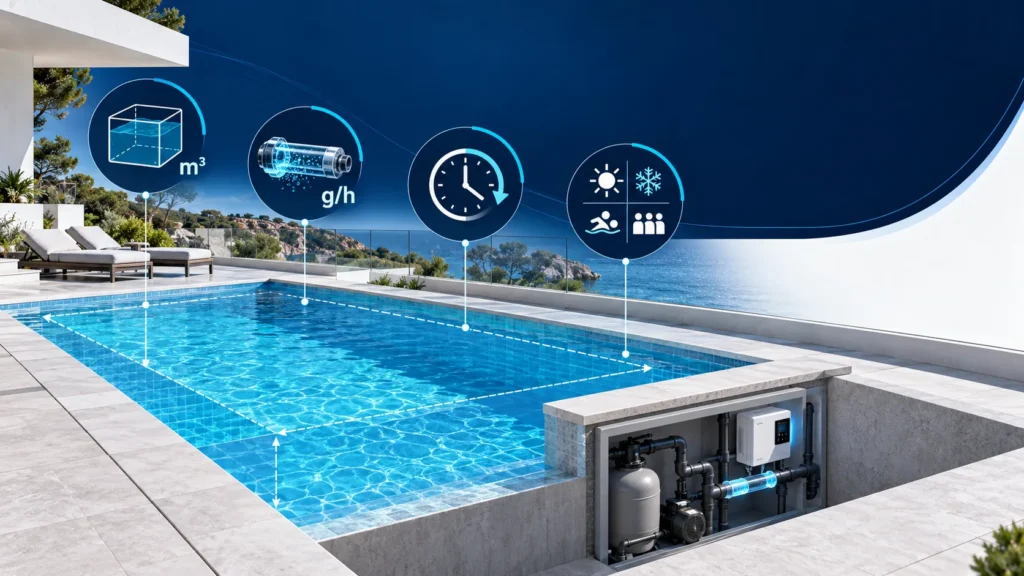
The salt chlorinator is a device that uses common salt (sodium chloride) and an electrolysis process to automatically produce chlorine directly in the pool water. Although technically chlorine is also used, this system generates the chemical in the water, reducing the need to add it manually.
Advantages of using the salt chlorinator.
Some of the main advantages of using the salt chlorinator are:
Comfort: Chlorine production is automatic, reducing the need for constant maintenance.
Less irritation: Generates more stable chlorine levels, reducing eye and skin irritation.
Sustainability: It does not require constant addition of chemicals, which can be more environmentally friendly.
Long-term savings: Although the initial cost is higher, it can be more economical over time due to the reduction in the purchase of chemicals.
Disadvantages:
Initial cost: The installation of a salt chlorinator is more expensive than the use of traditional chlorine.
Technical maintenance: Although it reduces chemical handling, the system requires occasional maintenance and can involve costly repairs.
Corrosion: Salt can accelerate the corrosion of some metal pool materials if precautions are not taken.
Which is the best option for you, chlorine or salt chlorinator?
Both methods of water treatments have their advantages and disadvantages, and the choice depends on your needs, budget and lifestyle:
Traditional chlorine: It is ideal if you are looking for an economical solution and don't mind frequent manual maintenance. It is perfect for those with small pools or for occasional use.
Salt chlorinator: It is an excellent choice if you value comfort, stable chlorine levels and a more enjoyable experience in the water. Although the initial cost is higher, it may be more convenient in the long term for frequently used pools.
There is no single answer to the decision between traditional chlorine and salt chlorinators. Both systems are effective in keeping water clean and disinfected, but the choice will depend on your personal priorities: do you prefer lower initial cost or greater long-term comfort? Evaluate your needs and budget to make the best decision for your pool.
At Trypool we have different options if you opt for the technology and convenience of salt chlorinators. Among them you can find the InverClear Salt Chlorinator, Trycolor Salt Chlorinator, Tecno Salt Chlorinator and SMC Salt Chlorinator. Enjoy the exclusive technology of a leader in swimming pool equipment.

 Español
 English (UK)
 Français
 Português