Connector for attaching the pool cleaner hose
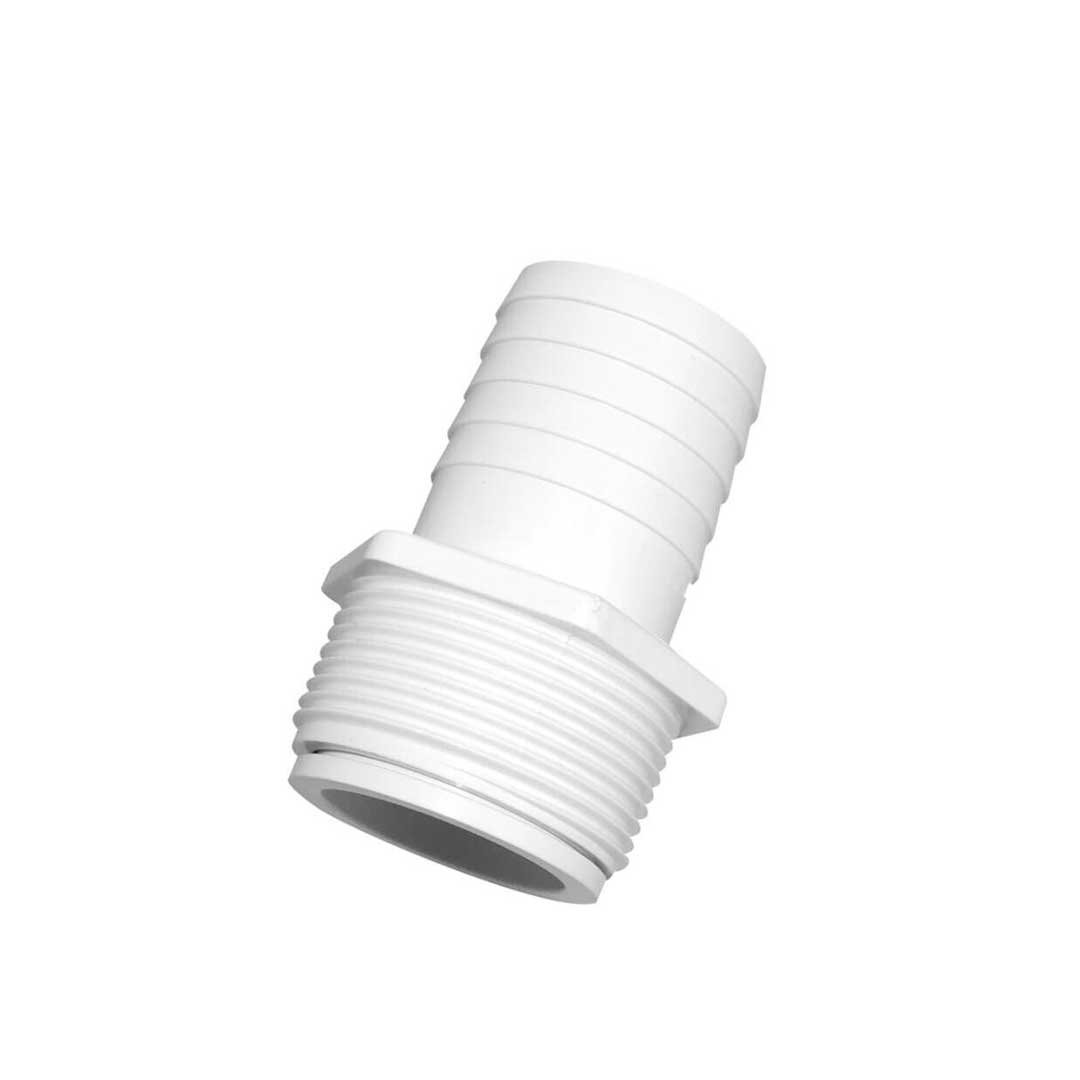
The hose connector for a pool cleaner It is designed to connect a self-floating hose to the pool’s suction point. Trypool confirms that one end screws onto a 1½″ suction nozzle and that the other end allows hoses with a diameter of Ø32 or Ø38 mm to be connected.
This connection is normally used during manual cleaning tasks. The hose connects the pool cleaner to the suction system, allowing the water and debris collected to flow into the filtration system.
Compatibility with two hose diameters
The product is suitable for self-floating hoses measuring:
Before placing your order, you should measure the internal diameter of the hose and check that the pool outlet has a compatible 1½″ thread.
You should not choose a fitting solely on the basis of its appearance. There are adaptors with similar threads, cones and diameters which are not always interchangeable.
Fitting to the suction nozzle
The threaded part is fitted onto the compatible suction nozzle or pool cleaner inlet. The connection must be secure and watertight, but without applying excessive force that could damage the thread or deform the fitting.
Before assembling it, we recommend that you:
- Clean the thread on the nozzle.
- Check that there are no cracks or deformations.
- Check whether the system requires a gasket or sealing element.
- Screw the part in place, ensuring it is correctly aligned.
- Connect the hose until it is securely fastened.
- Check that no air enters during suction.
An air lock can reduce the performance of the pool cleaner, cause the pump to lose its prime or result in the pump making noises.
Preparing the hose
Before connecting the hose to the suction inlet, it must be filled with water to expel the air inside. This can be done by gradually submerging the sections or by holding the end of the hose close to a discharge nozzle.
Once full, it is connected to the fitting to prevent air from re-entering. The pump and valves must be configured in accordance with the system design and the instructions provided by the maintenance engineer.
Maintenance and replacement
After use, it is recommended that you rinse the fitting with clean water, remove any dirt and check the condition of the thread and the connection area.
It must be replaced when it:
- Cracks.
- Deformations.
- Loose hose.
- Damaged thread.
- Leaks.
- Breaks caused by impact or wear and tear.
The exact material is not specified in the current product information sheet; therefore, solvents or harsh cleaning products should not be used without first checking their compatibility.


 No disponible en este momento
 No disponible en este momento
 No disponible en este momento

 Español
 English (UK)
 Français
 Português