Stainless steel straight pool brush
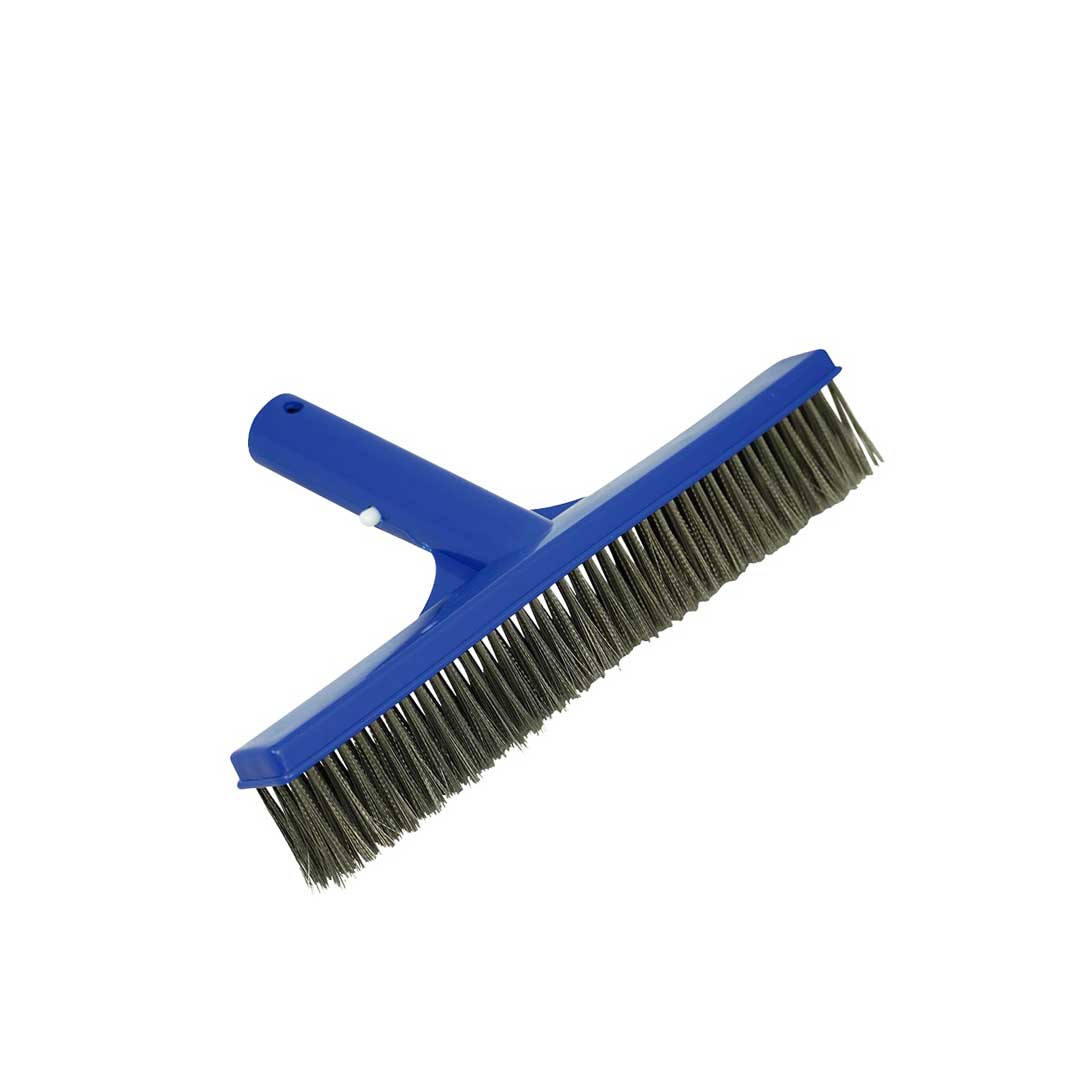
The Stainless steel straight pool brush It is designed for cleaning tasks that require more vigorous action than that provided by a conventional plastic-bristled brush.
Trypool confirms that it features stainless steel bristles and is designed to remove stubborn dirt and algae from both the bottom and the walls of the swimming pool. Its 25 cm width allows you to work on specific areas with greater control, particularly where there are localised build-ups.
Selection based on the coating
Metal bristles have a greater abrasive effect, so the product should not be advertised as suitable for all surfaces.
Pentair categorises its stainless steel brushes for plaster, concrete and gunite finishes, whilst the versions designed for liners use nylon bristles. This external reference does not automatically confirm the compatibility of the Trypool product, but it does highlight the importance of selecting the brush according to the pool’s finish.
Before using it on liner, polyester, paint, stainless steel, delicate mosaics or other sensitive surfaces, you should consult the surface manufacturer and carry out a controlled test on an inconspicuous area.
Clip fastening
The brush features a clip-on attachment for fitting it to a compatible telescopic pole. This system makes it easy to attach and remove the brush without the need for tools.
Before starting the cleaning, you must check that:
- The buttons on the clip are coming out correctly.
- The brush gets stuck.
- The pole has no play.
- The picks are all there.
- There are no bent or protruding edges.
If the brush is not secured properly, it may come loose inside the glass or make it difficult to control the pressure applied.
Correct method of use
To remove stubborn dirt, it is recommended that you work with controlled movements, without applying excessive pressure. It is better to make several passes than to press the brush too hard against the surface.
Brushing should direct debris towards areas where it can be collected by the filtration system or by a pool cleaner. Where algae are present, mechanical cleaning must be accompanied by appropriate water analysis and treatment, as the brush removes the build-up but does not, on its own, address the root cause of the problem.
Cleaning and maintenance – straight stainless steel pool brush
After each use, it is advisable to rinse the brush with clean water, remove any trapped debris and leave it to dry before storing it.
It must be stored in a place protected from concentrated chemicals and replaced when the bristles are bent, loose or likely to scratch the surface unevenly.


 No disponible en este momento
 No disponible en este momento

 Español
 English (UK)
 Français
 Português