Automatic measurement and adjustment of the pool’s pH
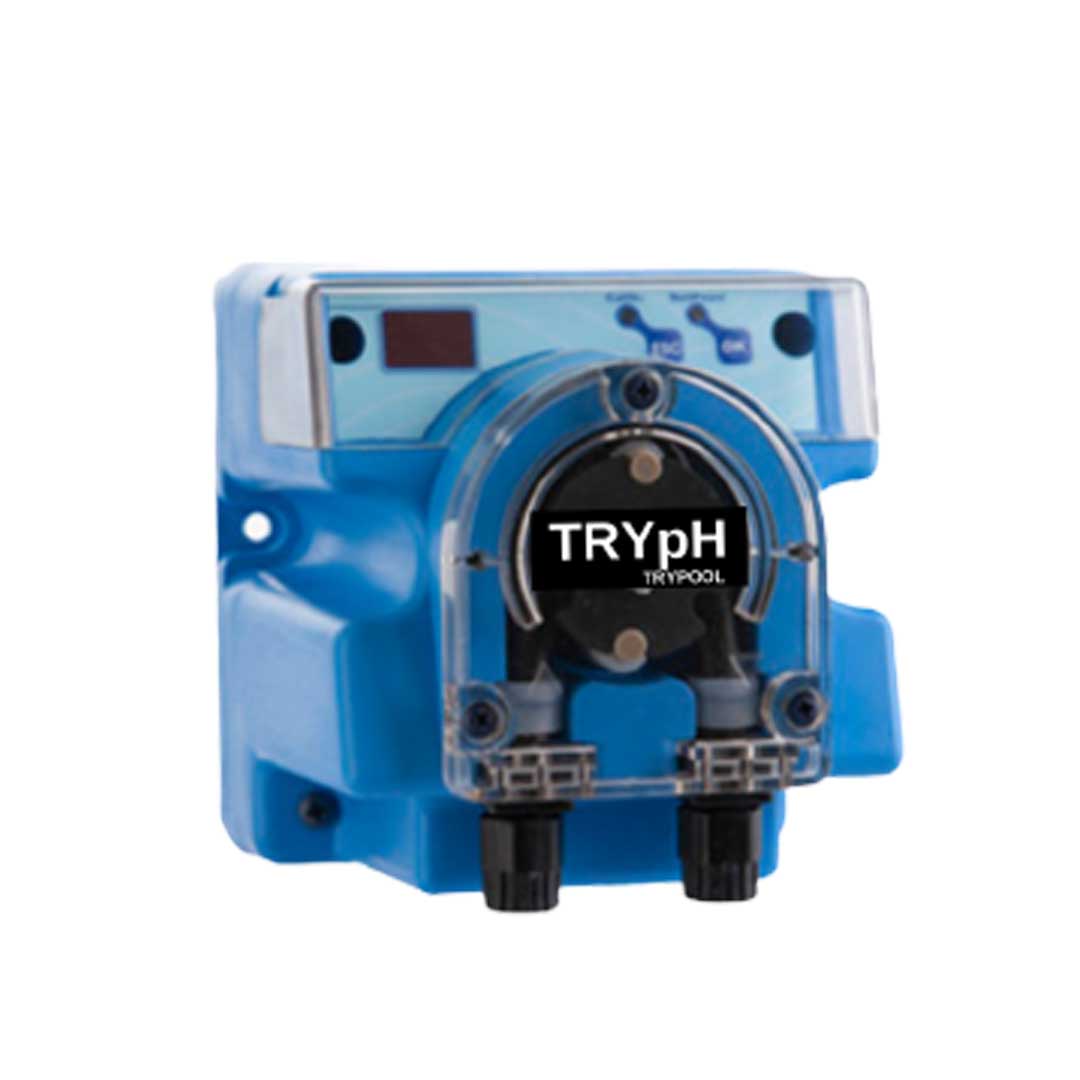
The TRYpH peristaltic pump is a measurement, control and dosing device designed to automate the regulation of water pH.
The probe continuously analyses the pH value and compares it with the setpoint. When the reading deviates from the set point, the controller activates the built-in peristaltic pump to dispense a corrective agent until the programmed value is restored.
This automation reduces the need for frequent manual adjustments and helps to maintain more stable processing conditions.
Integrated peristaltic metering pump
The unit features a self-priming peristaltic pump designed to dispense specific products for pH adjustment.
The Trypool catalogue states:
- Flow rate: 1.5 l/h.
- Maximum pressure: 2 bar.
Dosing is carried out at a constant flow rate using start-stop cycles. The manual states that this is not a proportional control system; the equipment starts or stops the pump depending on the reading and the set configuration.
Setpoint control – Peristaltic pump for pH
The installer can set the pH value to be maintained.
When the unit is operating in pH mode, it automatically calculates the dosing trigger point based on:
- The planned slogan.
- The use of acidic or alkaline products.
- The deviation set by the team.
Advanced adjustment must be carried out in accordance with the manual and the technical department’s recommendations, as incorrect configuration may result in incorrect dosing.
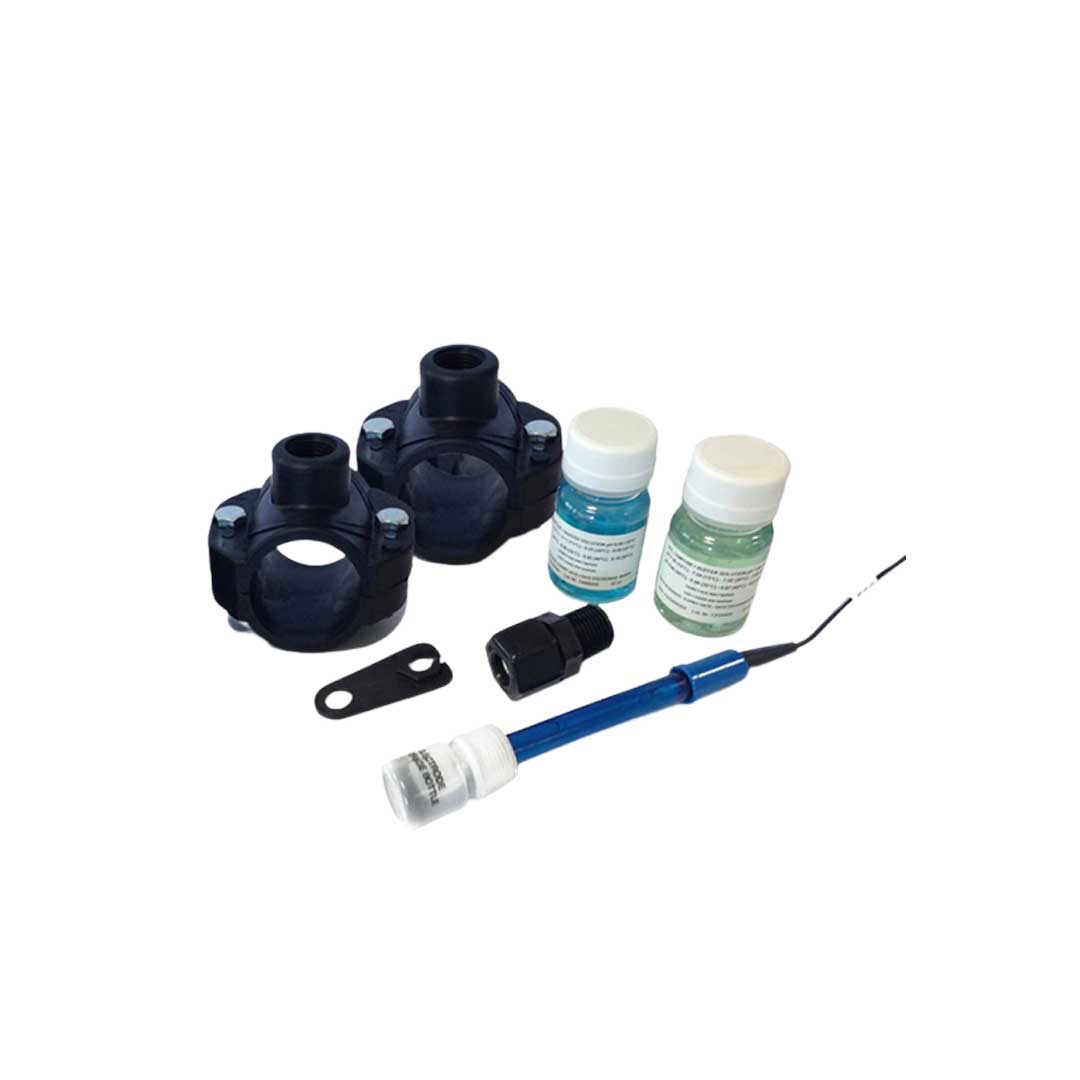
pH probe included
The TRYpH is supplied with a pH probe fitted with a BNC connector.
The probe must be installed in a section of the pipework where it can measure a representative sample of the water, and must be positioned upstream of the chemical injection point.
The device allows you to calibrate the reading using the buffer solution provided. Trypool states that calibration can be carried out manually or automatically, whilst the manual describes the procedure using the control panel and the reference solution.
IP65 protection
The housing has an IP65 rating, which is suitable for preventing the ingress of dust and water jets.
This protection does not mean that the equipment can be submerged or installed in a location that is permanently subject to flooding. It must be placed in a protected, well-ventilated and accessible area, in accordance with the applicable safety distances.
Installation kit included
The pump is supplied with the main components required for installation:
- pH probe with a BNC connector.
- Probe holder.
- Injection fitting.
- Intake filter.
- PE suction tube.
- PVC pressure pipe.
- Two metres of each pipe.
- pH 7 buffer solution.
- Fastening components as specified in the manual.
Installation synchronised with the filtration process
The unit must be operating when water is flowing.
The manual warns that it must not be connected in parallel with inductive loads, such as motors, and recommends using a suitable relay or control device. The installation must coordinate the TRYpH power supply with the circulation pump to prevent dosing when there is no flow.
Installation recommendations – Peristaltic pH pump
During installation, the following must be checked:
- Ensure that the equipment is secured in an accessible area.
- The suction height must not exceed 1.5 metres.
- The pipes must not have any sharp bends.
- Ensure that the connections are properly tightened.
- Ensure that the tubes are compatible with the chemical.
- Ensure that there is an earth connection.
- The supply voltage must be within the range of 230 V AC ±10 %.
- Ensure that the injection point is correctly positioned.
- Ensure that the probe is not exposed to concentrated product directly.
Use with a product that lowers or raises the pH
The electronics of the Peristaltic pump for pH allows you to configure the dosing for acidic or alkaline products.
In most salt-chlorinated swimming pools, a pH reducer is used, but the choice of product should be made only after analysing the actual behaviour of the water. No chemical other than the one intended for use should be employed without first checking its compatibility with the pump, pipes and seals.
Applications
TRYpH can be used in:
- Outdoor swimming pools.
- Indoor swimming pools.
- Spas.
- Jacuzzis.
- Systems using salt chlorination.
- Conventional treatment systems.
- Projects requiring automatic pH control.
Maintenance – Peristaltic pump for pH
To ensure the equipment continues to function properly, it is recommended that you check:
- Probe calibration.
- Condition and cleanliness of the probe.
- A solution for storing the probe during periods of inactivity.
- Condition of the peristaltic tube.
- Intake filter.
- Injection fitting.
- Suction and discharge pipes.
- No leaks.
- Correct pH reading.
- How the security system works.
Chemicals must be handled using the protective equipment recommended by the manufacturer and kept out of the reach of children.



 Español
 English (UK)
 Français
 Português